





Multichannel VPN Router
Higher bandwidth, more flexibility, more reliability, and less expense. The Multichannel VPN Router redefines company connectivity.
With the help of real channel bonding, up to six WAN connections of different providers can be combined into a highly reliable and fast Internet link. Interconnecting only three low-priced ADSL-lines by different providers already raises reliability to more than 99.9 per cent in the annual average. Running costs can hence be reduced considerably, with higher bandwidth and more resilience.
For almost any solution there is a proper Multichannel VPN Router, be it for mobile applications, fast company connectivity in remote areas, flexible site connection, or large networks.
You prefer a more technical explanation?
Read our technical whitepaper. (PDF file, 11 pages, 905 KB)
Download our product folder. (PDF file, 16 pages, 2 MB)
-
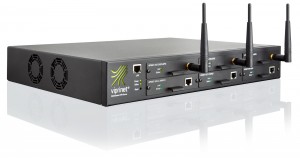
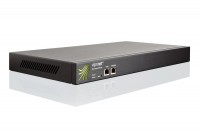
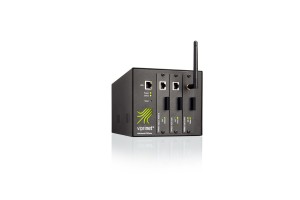
Compact and cost-effective. Three module slots bring reliability and speed for mobile use and small offices.
-
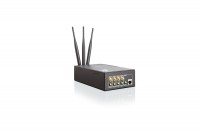
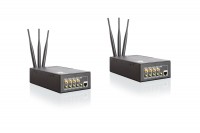
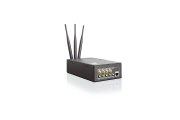
Robust industrial model. Four integrated modems, a resistant chassis and a very low energy offer the best solution for ultra-mobile usage. Suited for use in all kinds of vehicles.
-
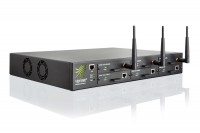
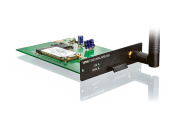
All-rounder with six module slots. The appropriate solution for company connectivity and site connection for small and medium-sized enterprises. Bundling capacity: 125 MBit/s.
-
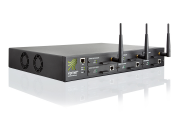
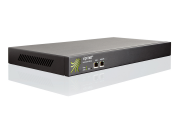
Enterprise model. Provides highest bonding capacity (up to 200 MBit/s) and best performance für medium sized and large enterprise networks.
According to the Viprinet principle, these multi WAN routers can only be employed in connection with a remote station, the Multichannel VPN Hub. This provides highest data security based on the SSL standard with 256 Bit AES encryption and optimal performance. Moreover, integrated WAN-optimization with Quality of Service (QoS) and rule based routing provides perfect control of available WAN capacities.
Supported features for all devices (excerpt)
- » Real bonding of all connections with / without TCP-optimizing
- » Quality of Service / traffic shaping (per WAN module / VPN tunnel)
- » NAT and port forwarding
- » Monitoring (graphical and remote-syslog)
- » Unlimited number of VPN tunnels (SSL / AES)
- » Rule-based routing
- » Traffic accounting via external SQL server
- » Multi-user web administration system